Georg Wilhelm Friedrich Hegel: Biography, Achievements & Lasting Legacy

Who Was Georg Wilhelm Friedrich Hegel?
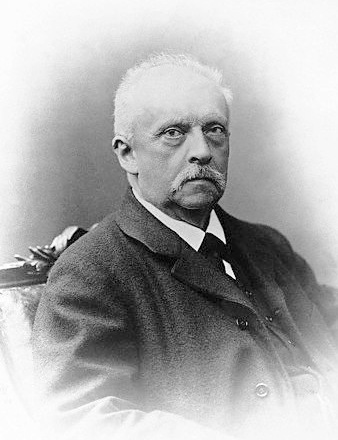
Georg Wilhelm Friedrich Hegel (27 August 1770 – 14 November 1831) was a German philosopher and a major figure in the tradition of German idealism. His influence on Western philosophy extends across a wide range of topics—from metaphysical issues in epistemology and ontology, to political philosophy, to philosophy of art and philosophy of religion.
Hegel was born in Stuttgart. His life spanned the transitional period between the Enlightenment and the Romantic movement. His thought was shaped by the French Revolution and the Napoleonic wars, events which he interpreted from a philosophical perspective. His academic career culminated in his appointment to the chair of philosophy at the University of Berlin, where he remained a prominent intellectual figure until his death.
Life and Career
Throughout his work, Hegel strove to correct what he argued were untenable dualisms common in modern philosophy. His principal achievement was the development of a comprehensive philosophical system, often termed absolute idealism, to account for reality as a unified whole. Central to this system is the concept of "spirit" (Geist), which Hegel presented as humankind coming to know itself through a historical process of rational development. Hegel's characteristic procedure, often termed dialectical or speculative, assesses concepts and forms of consciousness according to their own internal criteria, revealing their contradictions and one-sidedness. This leads to their resolution in a higher, more comprehensive unity which both cancels and preserves the initial stage. His major works, including the Phenomenology of Spirit (1807) and the Science of Logic (1812–1816), detail this systematic vision. In his political philosophy, he famously asserted that "world history is progress in the consciousness of freedom."
Hegel's influence has been profound and divisive. After his death, his followers split into rival "Right" and "Left" Hegelian camps. The Left, including Ludwig Feuerbach and Karl Marx, adapted his dialectical method for their materialist critiques of religion and society. In the twentieth century, his thought was further developed in traditions such as French Hegelianism and critical theory, and became a major point of reference for existentialism.
Twenty questions, eight minutes on the clock, and a percentile measured against everyone who has taken it. No sign-up.
Take the IQ test →Key Facts
- Born: August 27, 1770 in Stuttgart, Duchy of Württemberg
- Died: 1831
- Field: Philosophy
- Awards: Rank 3 in the Red Eagle Order
Legacy and Impact
The influence of Georg Wilhelm Friedrich Hegel extends far beyond his own lifetime. He fundamentally shaped human thought and intellectual discourse, and his ideas and philosophical frameworks remain foundational to this day.
Though he passed away in 1831, his ideas continue to be studied, debated, and built upon by scholars and practitioners worldwide.
Discover more brilliant minds in Philosophy
Explore Philosophy GeniusesRelated Articles
Explore More
Read the full profile of Georg Wilhelm Friedrich Hegel
View Georg Wilhelm Friedrich Hegel's Profile →