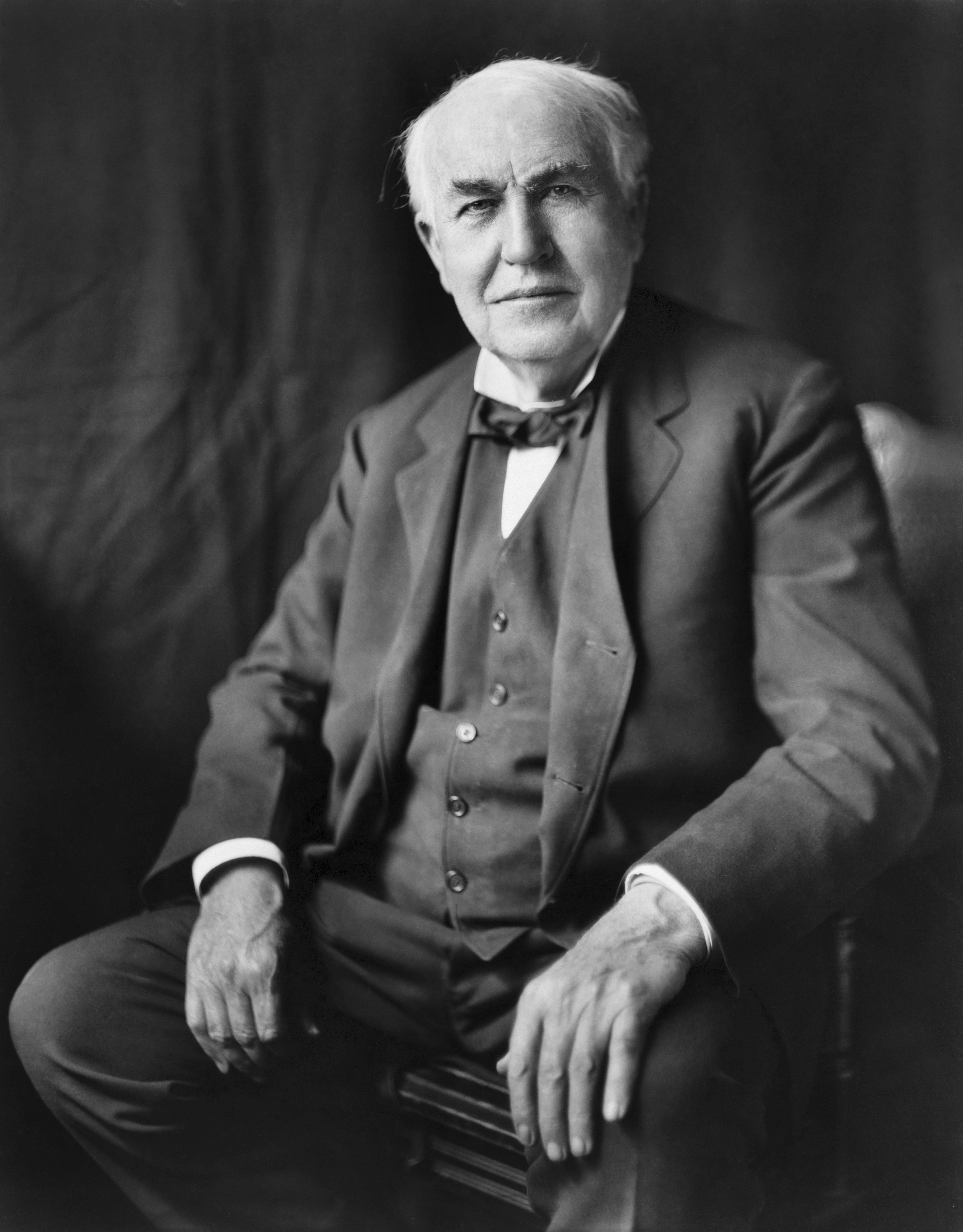
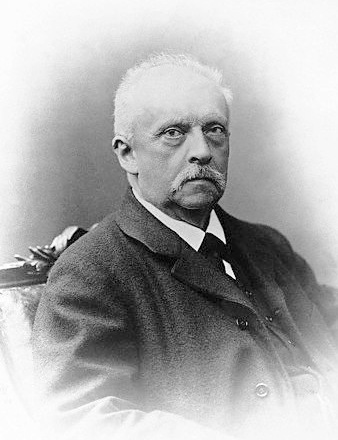
| Category | Albert Einstein | Stephen Hawking |
|---|---|---|
| Estimated IQ | ~160 | ~160 |
| Born | 1879, Ulm, Germany | 1942, Oxford, England |
| Key work | General Relativity, Special Relativity | Black hole radiation, Big Bang singularity |
| Nobel Prize | Yes (1921, photoelectric effect) | No |
| Major health challenge | None | ALS from age 21 |
| Best-selling book | Relativity (1916) | A Brief History of Time (1988) |
Albert Einstein — Reshaping Space, Time, and Reality
Albert Einstein's contribution to science is arguably unparalleled in scope and depth. In 1905 — his "Annus Mirabilis" — he published four papers that each independently deserved a Nobel Prize: the special theory of relativity, the photoelectric effect (for which he actually received his Nobel in 1921), Brownian motion, and mass-energy equivalence (E=mc²).
In 1915, he completed the general theory of relativity — arguably the most beautiful and powerful theory in the history of physics. It replaced Newton's gravitational framework with a geometric description of curved spacetime, predicted phenomena unknown at the time (gravitational waves, black holes, the expansion of the universe), and has withstood every experimental test for over a century.
Einstein's creative output in the decade between 1905 and 1915 is without parallel in physics. No single physicist has ever produced so many foundational insights in so short a time.
Twenty questions, eight minutes on the clock, and a percentile measured against everyone who has taken it. No sign-up.
Take the IQ test →Stephen Hawking — Triumph Over Adversity and the Cosmos
Stephen Hawking was diagnosed with motor neuron disease (ALS) at 21 and given two years to live. He lived until 76, producing foundational work in cosmology despite progressive paralysis that eventually left him communicating only by twitching a single cheek muscle to select characters on a screen.
His most important scientific contribution is Hawking radiation: the theoretical prediction that black holes are not entirely black — they emit thermal radiation due to quantum effects near the event horizon, and will eventually evaporate. This result, derived in 1974, was the first significant synthesis of quantum mechanics and general relativity — two theories that physicists have struggled to reconcile for a century. It remains one of the most important theoretical results in modern physics, though it has not yet been experimentally confirmed.
His 1988 book "A Brief History of Time" sold over 10 million copies, making it one of the most successful science books ever published.
The Verdict: Who Was Greater?
Most physicists who are asked this question privately answer: Einstein, and it's not particularly close. Einstein's contributions were more numerous, more foundational, and more directly verified by experiment. His general theory of relativity is a complete masterpiece; Hawking radiation, while brilliant, is still theoretical.
Both men stated their IQ was around 160. Both deflected questions about it, with Hawking famously saying: "People who boast about their IQ are losers." What's not in doubt is that both occupying the same century was one of physics' greatest gifts. Explore both at Einstein's profile and Hawking's profile.