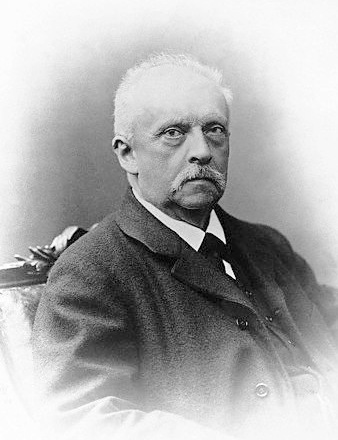
Ctesibius: Biography, Achievements & Lasting Legacy

Who Was Ctesibius?
Ctesibius or Ktesibios or Tesibius (Ancient Greek: Κτησίβιος; fl. 285–222 BCE) was a Greek inventor and mathematician in Alexandria, Ptolemaic Egypt. Very little is known of Ctesibius' life, but his inventions were well known in his lifetime. He was likely the first head of the Museum of Alexandria. He wrote the first treatises on the science of compressed air and its uses in pumps (and even in a kind of cannon). This, in combination with his work On pneumatics on the elasticity of air, earned him the title of "father of pneumatics." None of his written work has survived, including his Memorabilia, a compilation of his research that was cited by Athenaeus. Ctesibius' most commonly known invention today is a pipe organ (hydraulis), a predecessor of the modern church organ. He was married to a woman named Thais, who is not to be confused with Thaïs, the Greek hetaira who travelled with Alexander the Great on his military campaigns.
Key Facts
- Born: January 1, 285 in Alexandria, Egypt
- Died: 222
- Field: Mathematics
Legacy and Impact
The influence of Ctesibius extends far beyond his own lifetime. He fundamentally shaped the foundations of modern mathematics, and his theorems and mathematical frameworks remain foundational to this day.
Though he passed away in 222, his ideas continue to be studied, debated, and built upon by scholars and practitioners worldwide.
Ctesibius remains one of the most celebrated minds to emerge from Egypt, a testament to the rich intellectual heritage of the region.
Twenty questions, eight minutes on the clock, and a percentile measured against everyone who has taken it. No sign-up.
Take the IQ test →Notable Geniuses from Egypt
Egypt has produced many remarkable minds. Alongside Ctesibius:
View all geniuses from Egypt →
Discover more brilliant minds in Mathematics
Explore Mathematics GeniusesRelated Articles
Explore More
Read the full profile of Ctesibius
View Ctesibius's Profile →