Charles-Augustin de Coulomb: Biography, Achievements & Lasting Legacy

Who Was Charles-Augustin de Coulomb?
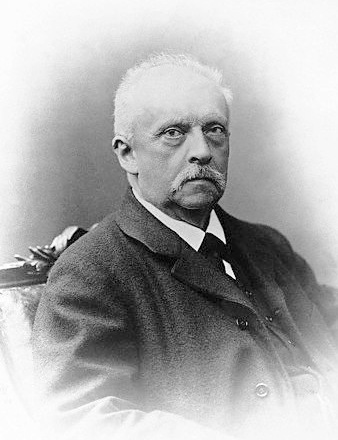
Charles-Augustin de Coulomb ( KOO-lom, -lohm, koo-LOM, -LOHM; French: [kulɔ̃]; 14 June 1736 – 23 August 1806) was a French officer, engineer, and physicist. He is best known as the eponymous discoverer of what is now called Coulomb's law, the description of the electrostatic force of attraction and repulsion. He also did important work on friction, and his work on earth pressure formed the basis for the later development of much of the science of soil mechanics.
The SI unit of electric charge, the coulomb, was named in his honor in 1880.
Key Facts
- Born: June 14, 1736 in Angoulême, Angoumois, France
- Died: 1806
- Field: Science
Legacy and Impact
The influence of Charles-Augustin de Coulomb extends far beyond his own lifetime. He fundamentally shaped our understanding of the natural world, and his discoveries and theories remain foundational to this day.
Though he passed away in 1806, his ideas continue to be studied, debated, and built upon by scholars and practitioners worldwide.
Twenty questions, eight minutes on the clock, and a percentile measured against everyone who has taken it. No sign-up.
Take the IQ test →Charles-Augustin de Coulomb remains one of the most celebrated minds to emerge from France, a testament to the rich intellectual heritage of the region.
Notable Geniuses from France
France has produced many remarkable minds. Alongside Charles-Augustin de Coulomb:
View all geniuses from France →
Discover more brilliant minds in Science
Explore Science GeniusesRelated Articles
Explore More
Read the full profile of Charles-Augustin de Coulomb
View Charles-Augustin de Coulomb's Profile →