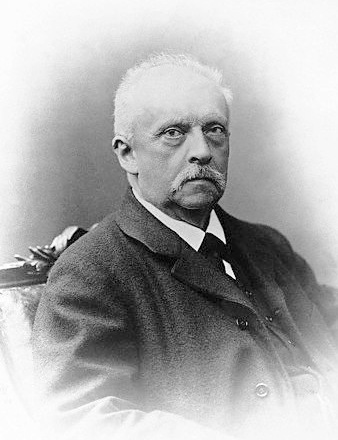
Augustin-Jean Fresnel: Biography, Achievements & Lasting Legacy

Who Was Augustin-Jean Fresnel?
Augustin-Jean Fresnel (10 May 1788 – 14 July 1827) was a French civil engineer and physicist whose research in optics led to the almost unanimous acceptance of the wave theory of light, fully supplanting Newton's corpuscular theory, from the late 1830s until the end of the 19th century. He is perhaps better known for inventing the catadioptric (reflective/refractive) Fresnel lens and for pioneering the use of "stepped" lenses to extend the visibility of lighthouses, saving countless lives at sea. The simpler dioptric (purely refractive) stepped lens, first proposed by Count Buffon and independently reinvented by Fresnel, is used in screen magnifiers and in condenser lenses for overhead projectors.
Fresnel gave the first satisfactory explanation of diffraction by straight edges, including the first satisfactory wave-based explanation of rectilinear propagation. By further supposing that light waves are purely transverse, Fresnel explained the nature of polarization. He then worked on double refraction.
Life and Career
Fresnel had a lifelong battle with tuberculosis, to which he succumbed at the age of 39. He lived just long enough to receive recognition from his peers, including (on his deathbed) the Rumford Medal of the Royal Society, and his name is ubiquitous in the modern terminology of optics and waves. After the wave theory of light was subsumed by Maxwell's electromagnetic theory in the 1860s, some attention was diverted from the magnitude of Fresnel's contribution. In the period between Fresnel's unification of physical optics and Maxwell's wider unification, a contemporary authority, Humphrey Lloyd, described Fresnel's transverse-wave theory as "the noblest fabric which has ever adorned the domain of physical science, Newton's system of the universe alone excepted".
Key Facts
- Born: May 10, 1788 in Broglie, Kingdom of France
- Died: 1827
- Field: Science
Legacy and Impact
The influence of Augustin-Jean Fresnel extends far beyond his own lifetime. He fundamentally shaped our understanding of the natural world, and his discoveries and theories remain foundational to this day.
Though he passed away in 1827, his ideas continue to be studied, debated, and built upon by scholars and practitioners worldwide.
Twenty questions, eight minutes on the clock, and a percentile measured against everyone who has taken it. No sign-up.
Take the IQ test →Augustin-Jean Fresnel remains one of the most celebrated minds to emerge from France, a testament to the rich intellectual heritage of the region.
Notable Geniuses from France
France has produced many remarkable minds. Alongside Augustin-Jean Fresnel:
View all geniuses from France →
Discover more brilliant minds in Science
Explore Science GeniusesRelated Articles
Explore More
Read the full profile of Augustin-Jean Fresnel
View Augustin-Jean Fresnel's Profile →