The Syllogism
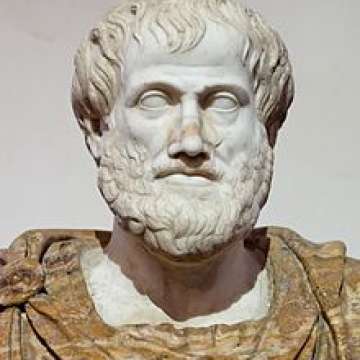
Aristotle's fundamental logical form is the syllogism: a conclusion derived from two premises. The classic example: All men are mortal. Socrates is a man. Therefore, Socrates is mortal. A valid syllogism guarantees that if the premises are true, the conclusion must be true. Aristotle identified over 200 valid syllogistic forms and classified them into figures.
The Categories
In his Categories, Aristotle argued that all things that can be said about reality fall into ten fundamental categories: substance, quantity, quality, relation, place, time, position, condition, action, and passion. This ontological framework — classifying all of being — influenced medieval philosophy, Christian theology, and Islamic philosophy for centuries.
The Law of Non-Contradiction
Aristotle formulated the law of non-contradiction: nothing can both be and not be at the same time and in the same respect. This foundational principle — "A cannot be both A and not-A" — is the bedrock of logical reasoning and classical mathematics.
Twenty questions, eight minutes on the clock, and a percentile measured against everyone who has taken it. No sign-up.
Take the IQ test →The Influence of Aristotelian Logic
Medieval European universities taught Aristotelian logic as the foundation of all academic study. Islamic scholars including Avicenna and Averroes transmitted and expanded it. Thomas Aquinas synthesized it with Christian theology. It was only displaced in the 19th century when George Boole reduced logic to algebra, and Gottlob Frege developed predicate logic capable of handling mathematical proofs that syllogisms could not.
Frequently Asked Questions
What is a syllogism?
A syllogism is a three-part logical argument: two premises lead to a conclusion. If the premises are true and the argument is valid, the conclusion must be true. Example: All men are mortal; Socrates is a man; therefore Socrates is mortal.
Did Aristotle invent logic?
Aristotle invented formal logic — the systematic study of the rules for valid reasoning. While pre-Socratic philosophers and Plato used logical arguments, Aristotle was the first to codify and classify the forms of valid inference.
Why was Aristotelian logic replaced?
In the 19th century, George Boole reduced logic to algebraic operations and Gottlob Frege developed predicate logic — a more powerful system capable of handling the complex quantification needed for mathematical proofs. Aristotle's syllogistic logic is a special case within modern formal logic.