
The Great Refusals: Geniuses Who Said No to the World’s Biggest Prizes
A million dollars declined, a Nobel refused on principle, an Oscar sent away: the strange honour roll of people who turned glory down.
Prizes are how the world keeps score. Which makes the rarest event in the history of achievement not winning — but refusing. Here are the great refusals, each one a self-portrait of its refuser.
Grigori Perelman — the Fields Medal and a million dollars
The Russian mathematician proved the Poincaré conjecture, a problem that had defeated a century of effort. In 2006 he declined the Fields Medal — mathematics' highest honour; no one had ever refused it. In 2010 the Clay Institute awarded him its $1,000,000 Millennium Prize. He declined that too, reasoning that the credit belonged equally to Richard Hamilton, whose programme he had completed: "I'm not interested in money or fame," he told a reporter through his closed apartment door. He had, colleagues report, essentially withdrawn from mathematics — leaving behind the century's cleanest act of intellectual integrity.
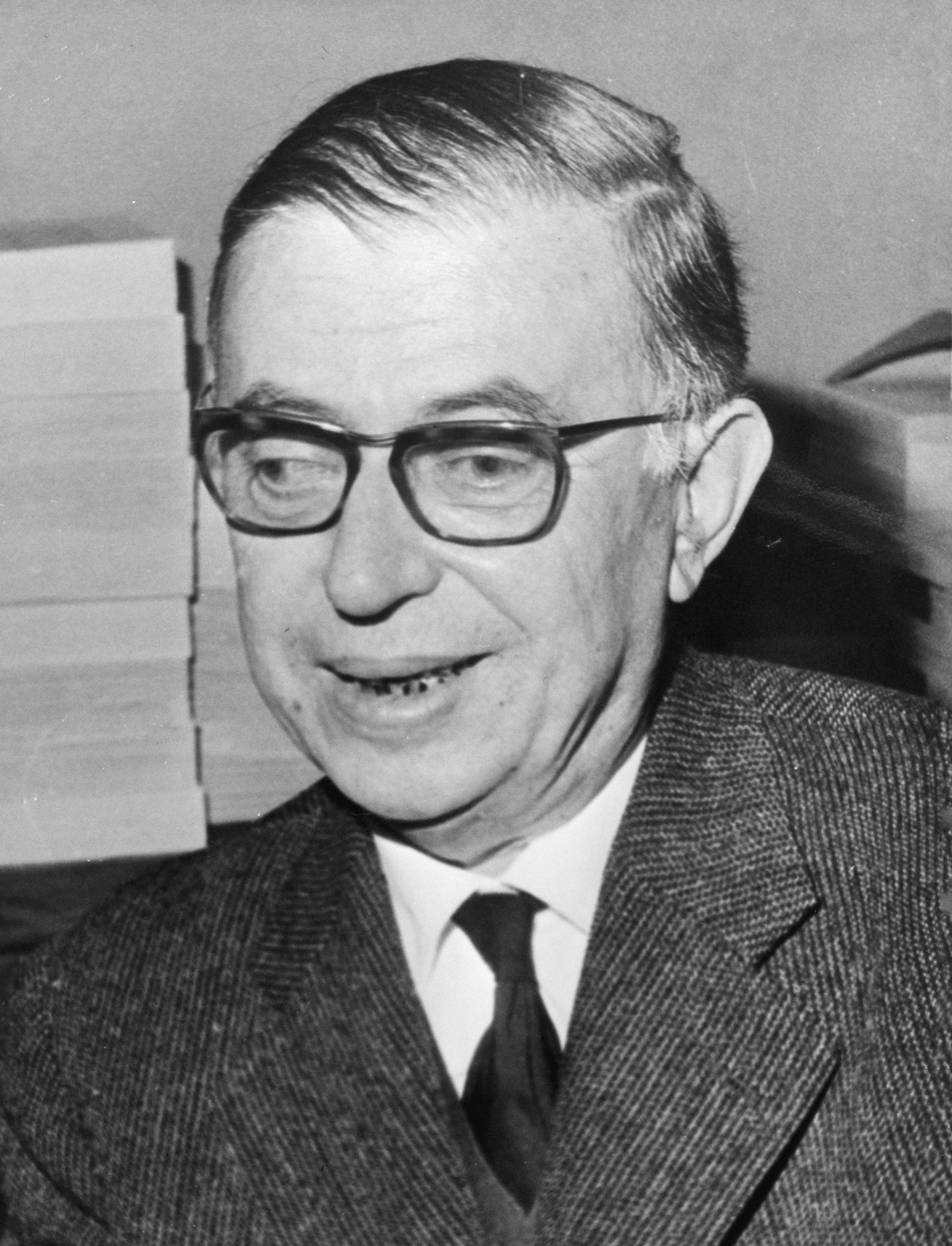
Jean-Paul Sartre — the Nobel Prize in Literature, 1964
The only person ever to voluntarily refuse the Literature Nobel did it on principle: "a writer should not allow himself to be turned into an institution." He had declined France's Légion d'honneur on the same grounds. Legend adds that he later asked whether he might still have the money; the Swedish Academy's archives show the reality was murkier — but the refusal itself was immediate, public and permanent.
Boris Pasternak — the refusal that wasn't chosen
Awarded the 1958 Literature prize after Doctor Zhivago was smuggled to the West, Pasternak first cabled Stockholm his joyful acceptance — then, under crushing Soviet pressure and threats to those around him, sent a second telegram declining. He died eighteen months later; in 1989 his son travelled to Stockholm to accept the medal at last. His refusal belongs on this list precisely because it was forced: the exception that shows what the voluntary refusals cost by comparison.
Le Duc Tho — the Nobel Peace Prize, 1973
Awarded jointly with Henry Kissinger for the Paris agreement on Vietnam, the North Vietnamese negotiator refused outright — the only Peace Prize refusal in history — saying peace had not actually been established in his country. Two committee members resigned over the award; the war continued for two more years.
George Bernard Shaw — the money, not the medal
Awarded the 1925 Literature prize, the 69-year-old playwright accepted the honour but refused the cash, directing it to fund translations of Swedish literature — quipping that he could forgive Nobel for dynamite, but not for the Nobel Prize. It remains the wittiest compromise in prize history.
Marlon Brando — the Academy Award, 1973
Voted Best Actor for The Godfather, Brando boycotted the ceremony and sent Apache activist Sacheen Littlefeather to refuse the statuette on live television, in protest at Hollywood's depiction of Native Americans — the most famous refusal in entertainment history, delivered to an audience of tens of millions.
<iframe width="560" height="315" src="https://www.youtube.com/embed/GItmC9lxeco" title="Poincaré Conjecture - Numberphile" frameborder="0" allowfullscreen loading="lazy"></iframe>"Freedom is what you do with what's been done to you."
— Jean-Paul Sartre
Watch: Poincaré Conjecture - Numberphile
What refusal reveals
Strip away the circumstances and every voluntary "no" on this list makes the same claim: that the work's worth is not the prize's to confer. It is the mirror image of the laureates who waited into their nineties for a medal — and a reminder that the scoreboard, however golden, is optional.
Frequently Asked Questions
Who refused the Fields Medal?
Grigori Perelman, in 2006, after proving the Poincaré conjecture. In 2010 he also declined the $1 million Clay Millennium Prize.
Who refused the Nobel Prize in Literature?
Jean-Paul Sartre, in 1964, on the principle that a writer should not become an institution. Boris Pasternak's 1958 refusal, by contrast, was forced by Soviet pressure.
Has anyone refused the Nobel Peace Prize?
Once: Le Duc Tho declined the 1973 prize for the Vietnam ceasefire, saying peace had not actually been established.