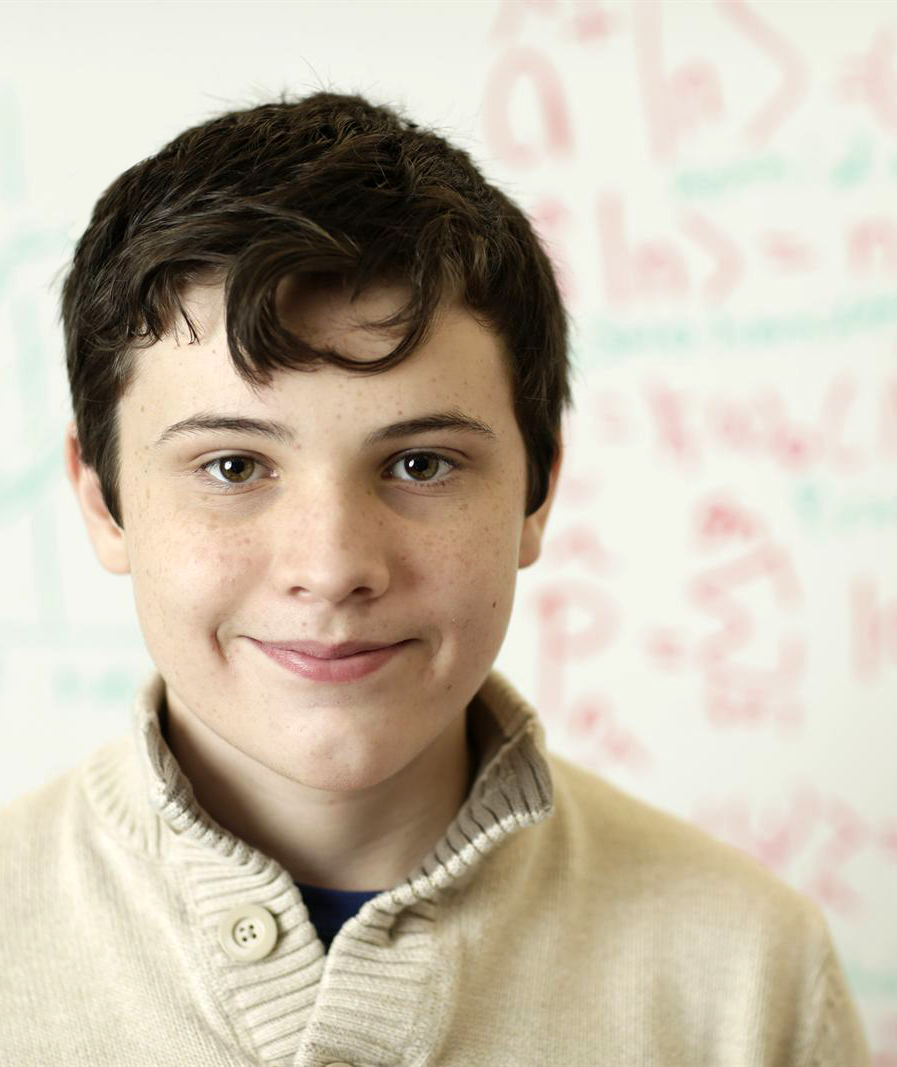
Three days in San Diego
The 2016 Extreme Memory Tournament ran from 24 to 26 June in San Diego. The UB Post, reporting on 30 June, described the field as “the top 24 memory athletes of the world” competing across five categories: names, cards, images, numbers and words. The total prize fund was $75,000, divided $20,000 for first place, $12,000 for second and $6,000 for third.
Purevjav, identified by the paper as a grandmaster of memory, reached the final and lost it to Simon Reinhard of Germany, described in the same report as the world's fifth-ranked athlete and a world champion. Second place carried $12,000. In a tournament built around raw speed rather than endurance, it was the deepest run of the week by any competitor except the champion.
The quarter-final against Alex Mullen
The match that defined the tournament came earlier. In the quarter-finals Purevjav faced Alex Mullen of the United States, who had won the world memory championship in 2015 and was, at that moment, the dominant figure in the sport. Purevjav won 4-3.
The UB Post called it the most sensational victory of the tournament, and the description is not hard to justify: one game separated the reigning world champion from an early exit, and it fell the Mongolian's way. The report does not record which of the five disciplines decided the seven games, or the margins within them.
The Mongolian five
Purevjav did not travel alone. “A total of five memory athletes of the Mongolian Intellectual Academy competed in the XMT 2016,” the paper wrote, and two of them finished on the podium. Tsetsegzul Zorigtbaatar, listed as an Asian master, took bronze by beating Germany's Johannes Mallow 4-1, Mallow being the top-ranked athlete of the period and the winner of the 2015 Extreme Memory Tournament.
Two of the three medals in San Diego therefore went to athletes from the same Ulaanbaatar academy. The paper headlined its account accordingly: Mongolia conquers Extreme Memory Tournament 2016. For a country of roughly three million people, taking silver and bronze at an invitational limited to two dozen competitors is the kind of result that gets a newspaper front page at home and almost no coverage anywhere else.
What the tournament asks of a competitor
The Extreme Memory Tournament is not the same test as a classical world memory championship. Where the championships run long disciplines over several days, the XMT as described by The UB Post is built on five short categories and resolved through direct matches between two competitors, from the quarter-finals to the final.
That structure rewards a particular profile: speed of encoding, immediate recall, and the nerve to repeat both under match pressure several times in an afternoon. A 4-3 scoreline of the kind Purevjav produced against Mullen exists only in a format where individual games are short enough to be won and lost repeatedly inside a single contest.
Vingt questions, huit minutes au chronomètre et un centile mesuré face à tous ceux qui l’ont passé. Sans inscription.
Passer le test de QI →What is documented — and what is not
The firm record is the result: silver at the 2016 Extreme Memory Tournament, a 4-3 quarter-final win over Alex Mullen, a final lost to Simon Reinhard, $12,000 in prize money, and membership of the Mongolian Intellectual Academy, all reported by The UB Post on 30 June 2016. The paper also gives his grade in the sport, grandmaster.
Almost everything a reader wants next is absent. No date of birth or age appears in the source, no school or coach, no training description, no interview, and no account of what he has done since 2016. His name is rendered two ways — E. Purevjav in Mongolian style, where Purevjav is the given name, and Purevjav Erdenesaikhan in Western order — which matters for anyone tracing later results.
| Personne | Pays | Étape | Âge / Donnée |
|---|---|---|---|
| Simon Reinhard | Allemagne | Vainqueur du Extreme Memory Tournament en 2014 et 2016 | 35 ans |
| Purevjav Erdenesaikhan | Mongolie | Argent, Extreme Memory Tournament 2016 | — |
| Scott Hagwood | États-Unis | Vainqueur du Championnat de mémoire des États-Unis quatre années consécutives | — |
| Oyun-Erdene Tsengelbayar | Mongolie | Or en chiffres parlés au Memoriad 2024 | — |
| Tatiana Cooley-Marquardt | États-Unis | Vainqueur du Championnat de mémoire des États-Unis trois fois | — |
What is documented — and what is not
✓ Documented
- Silver at the Extreme Memory Tournament, San Diego, 24–26 June 2016 (The UB Post)
- 4-3 quarter-final win over 2015 world memory champion Alex Mullen
- Final lost to Simon Reinhard of Germany; $12,000 in prize money
- Listed as a grandmaster and a member of the Mongolian Intellectual Academy
? Unverified, disputed or wrong
- No date of birth, age or biographical detail in the source
- No record of results before or after the 2016 tournament in these sources
- The individual disciplines that decided the Mullen match are not reported
Questions people ask about Purevjav Erdenesaikhan
What did Purevjav Erdenesaikhan win?
Silver at the 2016 Extreme Memory Tournament in San Diego, worth $12,000, after losing the final to Simon Reinhard of Germany.
Did he really beat Alex Mullen?
Yes. The UB Post reports that he defeated the 2015 world memory champion 4-3 in the quarter-finals, and calls it the most sensational result of the tournament.
How old is Purevjav Erdenesaikhan?
No source in this record gives his age or date of birth. The newspaper report identifies him only as a grandmaster of memory.
Why is his name written E. Purevjav?
Mongolian practice puts the father's name first as an initial. Purevjav is the given name; Erdenesaikhan the patronymic. Both orders appear in print.
Is Purevjav Erdenesaikhan on Wikipedia?
No Wikipedia article was found for him. The strongest available source is The UB Post's report of 30 June 2016.
What is the Extreme Memory Tournament?
An invitational limited to the world's top 24 memory athletes, contested in five categories — names, cards, images, numbers and words — through head-to-head matches, with a $75,000 prize fund in 2016.
Where is he now?
No source in this record states what he has done since 2016. That is a gap in the reporting, not a statement about his career.
Did other Mongolians medal in 2016?
Yes. Tsetsegzul Zorigtbaatar took bronze, beating Johannes Mallow 4-1. Five athletes of the Mongolian Intellectual Academy competed in total.
Quick quiz: how well do you know Purevjav’s story?
Whom did Purevjav Erdenesaikhan beat in the 2016 quarter-finals?
Where did he finish at the 2016 Extreme Memory Tournament?
How much was second place worth?
Sources
- Mongolia conquers Extreme Memory Tournament 2016 — The UB Post, 2016-06-30
Checked by the Geniuses.club editorial team. Ages are given as of September 2026.
Découvrez D'Autres Jeunes Prodiges
Plus de 50 récits de jeunes génies contemporains qui transforment les échecs, la musique, la science et l'art.
Explorer Tous les Prodiges →Profils de Jeunes Prodiges Associés
 Scott Hagwood🇺🇸 États-Unis — Il a remporté le Championnat de mémoire des États-Unis en 2001, 2002…
 Tatiana Cooley-Marquardt🇺🇸 États-Unis — Le premier nom sur la liste des vainqueurs du Championnat de mémoire des…
 Simon Reinhard🇩🇪 Allemagne — Un avocat allemand capable de fixer l'ordre d'un paquet mélangé…
 Wesley Twiggs🇺🇸 États-Unis — Le titre est décidé par deux paquets mélangés, cinq minutes…
 Ram Kolli🇺🇸 États-Unis — Il a remporté le titre national de mémoire…
 Oyun-Erdene Tsengelbayar🇲🇳 Mongolie — Une voix lit des chiffres à haute voix. Après 175 d'entre eux…