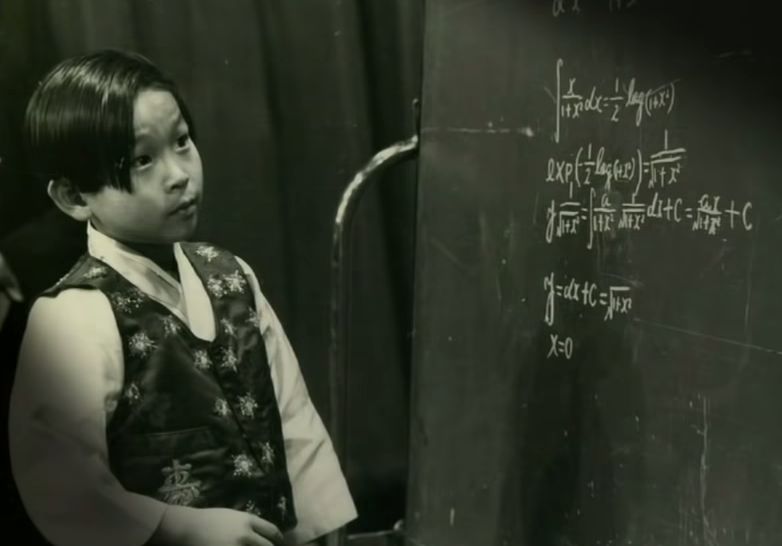
The award
The Society for Science lists Liu among the 2016 top winners with a $50,000 Intel Foundation Young Scientist Award, one of two given below the fair's $75,000 first prize. She was 17 and from Salt Lake City.
Her project title is published in full but without an abstract, so this page describes what the title states — the material class, the source of the material and the three properties targeted — and nothing beyond it.
Why solid electrolytes matter
The electrolyte is the medium that carries ions between a battery's electrodes. In most rechargeable lithium batteries it is a flammable liquid, which is the component behind thermal runaway and the fires that follow.
Replacing it with a solid is one of the standing goals of battery research, and 'solid polymer electrolyte' names one route to it. The word 'nature-based' in Liu's title indicates that the polymers were derived from natural rather than petrochemical sources, which is what connects the safety argument to the sustainability one. The source reports no conductivity figures, no cell performance and no results.
The phrase 'high-performance' in the title signals the constraint that makes the problem hard. Solid electrolytes have been known for decades; the difficulty has always been that ions move through them more slowly than through a liquid, so safety is bought at the cost of power. A project claiming safety, sustainability and efficiency together is claiming to have worked on that trade-off.
The 2016 fair
Intel ISEF 2016 ran from 8 to 13 May at the Phoenix Convention Center, with approximately 1,750 young scientists selected from 419 affiliated fairs across more than 75 countries, regions and territories.
About 600 finalists received recognition, including 20 Best of Category winners at $5,000 each, with $1,000 grants to their schools and affiliated fairs.
Finalists reach Phoenix only by winning an affiliated regional, state or national fair first, which is what makes the field comparable across 75 countries. A top-three finish is measured against that whole pipeline rather than against a single national competition.
The rest of the 2016 podium
The Gordon E. Moore Award of $75,000 went to Han Jie (Austin) Wang, 18, of Vancouver, for engineering bacteria to boost microbial fuel cell performance.
Vingt questions, huit minutes au chronomètre et un centile mesuré face à tous ceux qui l’ont passé. Sans inscription.
Passer le test de QI →The other $50,000 award went to Syamantak Payra, 15, of Friendswood, Texas, for an electronically aided leg orthosis. Battery chemistry, bioelectricity and assistive engineering shared the top of the 2016 standings.
What is documented — and what is not
The listing gives her name, age, home city, the award, its value and the project title. It names no school, no mentor and no laboratory, and publishes no data.
It also stops at the fair. No source used here reports her later studies or work, or whether the electrolyte research was published or continued. Her birth year is inferred from being 17 in May 2016 and is approximate.
A note on the name
Kathy Liu is a common name, and searches return several unrelated people in science, business and public life. Nothing on this page refers to any of them.
The identifying details in the record used here are narrow and specific: Salt Lake City, 17 years old, Intel ISEF 2016, and a project on nature-based solid polymer electrolytes. Any claim about her that does not sit alongside those facts is not supported by the source used for this entry.
| Personne | Pays | Étape | Âge / Donnée |
|---|---|---|---|
| Sawsan Ahmed | États-Unis | La plus jeune diplômée du Broward College, à 12 ans, en décembre 2021 | 12 ans |
| Arvind Mahankali | États-Unis | A remporté le Scripps National Spelling Bee 2013 à 13 ans | 13 ans |
| Kerry Close | États-Unis | A remporté le Scripps National Spelling Bee 2006 à 13 ans | 13 ans |
| Shania Muhammad | États-Unis | La plus jeune diplômée de la Langston University, à 15 ans | 15 ans |
| Kathy Liu | États-Unis | Prix Intel Foundation Young Scientist Award de 50 000 $ à l'Intel ISEF 2016 | 17 ans |
What is documented — and what is not
✓ Documented
- $50,000 Intel Foundation Young Scientist Award at Intel ISEF 2016 at 17 (Society for Science)
- Project on nature-based solid polymer electrolytes for high-performance rechargeable batteries
- From Salt Lake City, Utah
? Unverified, disputed or wrong
- No abstract, materials detail or performance data in the source
- No school, mentor or laboratory named
- The name is shared by several unrelated people, so search results should be treated with care
Questions people ask about Kathy Liu
How old was Kathy Liu when she won?
Seventeen, in May 2016. No date of birth appears in the source used here.
What was her project about?
Nature-based solid polymer electrolytes intended to improve the safety, sustainability and efficiency of high-performance rechargeable batteries.
Why replace a liquid electrolyte?
The liquid electrolyte in most lithium batteries is flammable and is the component involved in thermal runaway and battery fires.
How much did she win?
$50,000, one of two Intel Foundation Young Scientist Awards at Intel ISEF 2016.
Are there results from the work?
The source publishes the project title only. No conductivity, cell performance or other data is documented here.
Where is Kathy Liu now?
No source used here reports on her studies or work after 2016.
Is Kathy Liu on Wikipedia?
No Wikipedia article on this Kathy Liu was confirmed for this entry, and the name is shared by several unrelated people.
Who won the top prize that year?
Han Jie (Austin) Wang of Vancouver, for work on microbial fuel cells.
Quick quiz: how well do you know Kathy’s story?
What part of a battery did Kathy Liu's project address?
How much was her award worth?
Where is she from?
Sources
- Intel ISEF 2016 (top award winners) — Society for Science
Checked by the Geniuses.club editorial team. Ages are given as of September 2026.
Découvrez D'Autres Jeunes Prodiges
Plus de 50 récits de jeunes génies contemporains qui transforment les échecs, la musique, la science et l'art.
Explorer Tous les Prodiges →Profils de Jeunes Prodiges Associés
 Shania Muhammad🇺🇸 États-Unis — Elle a terminé une licence à 15 ans. Un an plus tard…
 Arvind Mahankali🇺🇸 États-Unis — Il a épelé 'knaidel', a remporté le concours national…
 Sawsan Ahmed🇺🇸 États-Unis — Elle a emmené son ours en peluche dans un laboratoire de biologie…
 Kerry Close🇺🇸 États-Unis — Quatre concours nationaux ont fini en défaite. Le cinquième s'est terminé…
 Sriram Hathwar🇺🇸 États-Unis — Il était le plus jeune candidat au concours à huit ans. Six ans plus…
 Balu Natarajan🇺🇸 États-Unis — Le fils d'un immigré a remporté le concours d'anglais des États-Unis en…