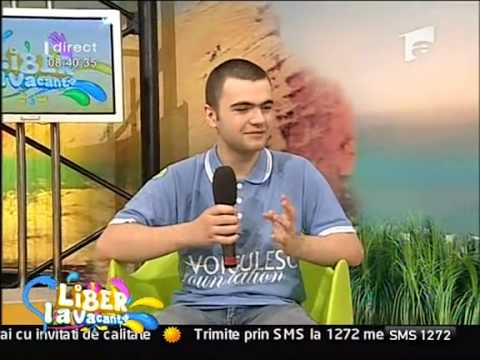
The award
The Society for Science lists the 2013 Gordon E. Moore Award, worth $75,000, to Budisteanu for using artificial intelligence to create a low-cost self-driving car. The award is given to one project judged best across the entire fair rather than best in a category.
The listing spells his surname 'Budistineau', a variant that differs from the Romanian spelling Budișteanu used elsewhere. Both refer to the same 2013 winner from Ramnicu Valcea; the discrepancy is noted here rather than silently corrected.
What the project set out to do
The stated goal is in the title: low cost. Autonomous driving research at the time was dominated by vehicles carrying high-resolution laser scanners priced in the tens of thousands of dollars, and the expense of that sensing was the principal barrier to deployment.
Budisteanu's entry proposed artificial intelligence as the substitute — doing in software what expensive hardware was doing in the sensor. The source used here publishes no technical description beyond the title, so this page does not state which algorithms, sensors or test results were involved.
The 2013 fair
Intel ISEF 2013 ran from 13 to 17 May at the Phoenix Convention Center in Arizona, with approximately 1,600 young scientists drawn from 433 affiliated fairs across more than 70 countries, regions and territories.
More than 500 finalists received awards, including 17 Best of Category winners at $5,000 each, and the schools and affiliated fairs of winners received $1,000 grants. The Moore Award is the single largest prize in that structure.
The rest of the podium
Two Intel Foundation Young Scientist Awards of $50,000 were given in 2013. One went to Eesha Khare, 18, of Saratoga, California, for the design and synthesis of hydrogenated titanium dioxide and polyaniline nanorods for flexible high-performance supercapacitors.
The other went to Henry Lin, 17, of Shreveport, Louisiana, for work on cool core bias in Sunyaev-Zel'dovich galaxy cluster surveys. Autonomous vehicles, energy storage and observational cosmology shared the 2013 top table.
What is documented — and what is not
The listing gives his name, age, home city and the award. It publishes no abstract, no technical detail and no results, and it names no school, mentor or institution.
Veinte preguntas, ocho minutos de reloj y un percentil medido frente a todos los que la han hecho. Sin registro.
Hacer la prueba de CI →It also stops in May 2013. Subsequent coverage of Budisteanu exists in the wider press, but none was used for this entry, so nothing is claimed here about companies, further research or awards after the fair. His birth year is inferred from being 19 that May and is approximate.
Winning from outside the United States
Intel ISEF draws from more than 70 countries, but its top awards have historically gone most often to American finalists, simply because the American affiliated-fair network sends the largest delegation.
Budisteanu's 2013 win is notable on those terms: a first prize taken by a student from a city of fewer than a hundred thousand people in southern Romania, against a field of roughly 1,600 assembled from 433 qualifying fairs.
| Persona | País | Hito | Edad / Dato |
|---|---|---|---|
| Elisabeth Anisimow | Estados Unidos | Pinturas vivientes vendidas a los 11 años por 2.500-5.000 dólares cada una | 11 años |
| Carmel Bechler | Israel | Joven fotógrafo de vida silvestre del año 2023 | 16 años |
| Andrea Dominizi | Italia | Un escarabajo en la esquina del encuadre, maquinaria de tala detrás y un | 17 años |
| Ionut Budisteanu | Rumania | Premio Gordon E. Moore, máximo galardón en la Intel ISEF 2013 | 19 años |
| Alexis Tinker-Tsavalas | Alemania | Ganador del premio al Joven fotógrafo de vida silvestre del año 2024 | — |
What is documented — and what is not
✓ Documented
- Won the $75,000 Gordon E. Moore Award at Intel ISEF 2013 at 19 (Society for Science)
- Project listed as using artificial intelligence to create a low-cost self-driving car
- From Ramnicu Valcea, Romania
? Unverified, disputed or wrong
- No abstract, technical description or test results in the source
- Surname spelled 'Budistineau' in the listing, differing from the Romanian spelling
- No reporting used here on his work after May 2013
Questions people ask about Ionut Budisteanu
How old was Ionut Budisteanu when he won?
Nineteen, in May 2013. No date of birth appears in the source used here.
What did he win?
The Gordon E. Moore Award, the top prize at Intel ISEF 2013, worth $75,000.
What was the project?
Listed as 'Using Artificial Intelligence to Create a Low Cost Self-Driving Car'. The source publishes no technical detail beyond that title.
Why is his name spelled differently in places?
The Society for Science listing spells it 'Budistineau'; the Romanian spelling is Budișteanu. Both refer to the same 2013 winner.
Where is he from?
Ramnicu Valcea, in southern Romania.
Where is Ionut Budisteanu now?
No source used here reports on his work after the 2013 fair.
Is Ionut Budisteanu on Wikipedia?
No Wikipedia article was confirmed for this entry. The record used here is the Society for Science listing.
Did his car ever drive itself on public roads?
The source makes no such claim and reports no testing. Nothing on this page states that it did.
Quick quiz: how well do you know Ionut’s story?
Which award did Ionut Budisteanu win in 2013?
What was his project about?
Which country is he from?
Sources
- Intel ISEF 2013 (top award winners) — Society for Science
Checked by the Geniuses.club editorial team. Ages are given as of September 2026.
Descubre Más Niños Prodigio
Más de 50 historias de jóvenes genios contemporáneos que transforman el ajedrez, la música, la ciencia y el arte.
Explorar Todos los Prodigios →Perfiles de Niños Prodigio Relacionados
 Michelle Hua🇺🇸 Estados Unidos — Su software reconoce lo que una persona está haciendo a partir de la…
 Aida Mitroi🇷🇴 Rumania — Tres oros en tres años, y una clasificación que mejoró cada…
 David-Andrei Anghel🇷🇴 Rumania — Una puntuación máxima para el país que inventó la…
 Mălina-Carla Pavel🇷🇴 Rumania — Séptima del mundo en Burdeos…
 Shania Muhammad🇺🇸 Estados Unidos — Terminó una licenciatura a los 15 años. Un año después…
 Arvind Mahankali🇺🇸 Estados Unidos — Deletreó 'knaidel', ganó el concurso nacional de ortografía y luego…
.jpg)
