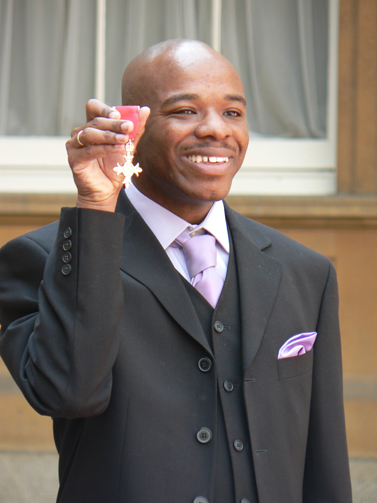
What happened in Pittsburgh
Intel ISEF 2015 ran from 10 to 15 May at the David L. Lawrence Convention Center in Pittsburgh, Pennsylvania. Roughly 1,700 young scientists had been selected from 422 affiliated fairs and represented more than 75 countries, regions and territories. About 600 finalists went home with prizes.
The Gordon E. Moore Award is the top prize of the fair, named for the Intel co-founder, and it carried $75,000. In 2015 it went to Raymond Wang of Vancouver, Canada, then 17, for a project listed as Aircraft Cabin Airflow: Curbing Disease Transmission. Two Intel Foundation Young Scientist Awards of $50,000 each went to Nicole Ticea, 16, also of Vancouver, for a low-cost disposable device for point-of-care HIV testing, and to Karan Jerath, 18, of Friendswood, Texas, for work on subsea oil-spill remediation.
The problem he took on
An aircraft cabin is a sealed tube in which several hundred people share a recirculated air supply for hours. When one passenger is infectious, the pattern of air movement inside that tube determines who else is exposed. Wang's project addressed that pattern directly rather than treating it as fixed.
The solution described in the coverage used here is a fin-shaped device fitted inside the cabin that increases the amount of fresh air reaching passengers and redirects air carrying pathogens away from them. The appeal of the approach is that it modifies existing aircraft rather than requiring new ones: a retrofit that changes the airflow geometry is a far cheaper intervention than redesigning a ventilation system.
The TED talk
In November 2015, still 17, Wang gave a TED talk titled How germs travel on planes, and how we can stop them. The talk is the most accessible account of the work and the reason most people have heard of it: the science fair award was reported in trade and education press, while the talk reached a general audience.
The sequence matters. A prize at a science fair is a judgement made by specialists about a piece of work; a TED talk is the work explained to everyone else. Doing both inside six months, at 17, is unusual, and it is the part of Wang's record that distinguishes him from the many strong ISEF finalists whose projects never leave the convention centre.
What is documented, and what is not
Firm: the award, its value and the year; his age, 17, and home city, Vancouver; the project title; the scale of Intel ISEF 2015; the other top award winners; and the TED talk and its title.
Not documented in the sources used here: his exact date of birth, which is why the birth year on this page is derived from his reported age; his school; whether the airflow device was patented, tested by an airline or adopted commercially; and what he has done since 2015. The sources record an award and a talk, not a career.
Zwanzig Fragen, acht Minuten auf der Uhr und ein Perzentil, gemessen an allen bisherigen Teilnehmern. Ohne Anmeldung.
IQ-Test starten →What ISEF is, and why the Moore Award matters
The International Science and Engineering Fair is the largest pre-university science competition in the world, and its structure is unusual: entrants qualify through a chain of local and regional fairs, 422 of them in 2015, rather than by applying directly. By the time a project reaches the top award it has been judged repeatedly by different panels.
The Gordon E. Moore Award is the single largest prize on offer and goes to one project a year. Winning it at 17 places Wang in a very small group. What the record here does not settle is the question that matters most for a public-health invention: whether it was ever built into an aircraft. Nothing in these sources says that it was.
| Person | Land | Meilenstein | Alter / Wert |
|---|---|---|---|
| Roberta Battaglia | Kanada | Ein Golden Buzzer und ein Finalplatz in der 15. Staffel von America's Got Talent | 11 Jahre |
| Finola Hackett | Kanada | Zweitplatzierte beim Scripps National Spelling Bee 2006 | 14 Jahre |
| Nelson Sexton | Kanada | Entwicklung des Survival-Spiels Unturned auf Steam mit 16 | 16 Jahre |
| Raymond Wang | Kanada | Mit 17 gestaltete er die Luft in einer Flugzeugkabine neu und gewann den Preis der Messe | 17 Jahre |
| Ayla Tesler-Mabé | Kanada | Virale Gitarren-Cover; Fender-Endorser | — |
What is documented — and what is not
✓ Documented
- Gordon E. Moore Award and $75,000 at Intel ISEF 2015
- Aged 17, from Vancouver, Canada
- Project title: Aircraft Cabin Airflow: Curbing Disease Transmission
- TED talk in November 2015: How germs travel on planes, and how we can stop them
? Unverified, disputed or wrong
- Date of birth and school are not stated in these sources
- Whether the airflow device was patented, tested or adopted is not documented
- No information here on his studies or work after 2015
- The device is described only in general terms in this material
Questions people ask about Raymond Wang
How old is Raymond Wang?
He was 17 at Intel ISEF in May 2015. No source used here gives his date of birth, so the birth year on this page is approximate.
What did Raymond Wang invent?
A fin-shaped device for aircraft cabins that increases the fresh air reaching passengers and redirects air carrying pathogens away from them, presented as Aircraft Cabin Airflow: Curbing Disease Transmission.
How much did he win?
$75,000, the Gordon E. Moore Award, the top prize at Intel ISEF 2015.
What is Intel ISEF?
The largest pre-university science competition in the world. The 2015 edition drew about 1,700 finalists selected through 422 affiliated fairs from more than 75 countries, regions and territories.
Who else won a top award in 2015?
Nicole Ticea, 16, of Vancouver and Karan Jerath, 18, of Friendswood, Texas, each received an Intel Foundation Young Scientist Award of $50,000.
Is the device used on aircraft?
Not according to any source used here. Nothing in this material says the design was patented, tested by an airline or put into service.
Where is Raymond Wang now?
Not documented. The sources used here cover 2015 and do not follow him afterwards.
Quick quiz: how well do you know Raymond’s story?
Which award did Raymond Wang win at Intel ISEF 2015?
How much was the prize?
What did his project address?
Sources
- Intel ISEF 2015 (top award winners) — Society for Science
- How germs travel on planes -- and how we can stop them — TED, 2015-11
Checked by the Geniuses.club editorial team. Ages are given as of September 2026.
Weitere Wunderkinder Entdecken
Über 50 Geschichten zeitgenössischer junger Genies, die Schach, Musik, Wissenschaft und Kunst verändern.
Alle Wunderkinder Entdecken →Verwandte Wunderkind-Profile
 Aswath Suryanarayanan🇮🇳 Indien — Ein von Magneten angetriebenes Auto und ein mathematisches Modell für…
 Ayla Tesler-Mabé🇨🇦 Kanada — Ein Teenager postete Gitarren-Cover aus Vancouver…
 Nelson Sexton🇨🇦 Kanada — Ein 16-Jähriger stellte ein Zombie-Survival-Spiel auf Steam und es…
 Finola Hackett🇨🇦 Kanada — Eine vierzehnjährige Kanadierin buchstabierte sich auf den zweiten…
 Roberta Battaglia🇨🇦 Kanada — Ein elfjähriges Mädchen aus Toronto holte einen Golden Buzzer und…
 Hua Wei Chan🇨🇦 Kanada — Er kann zwei dreistellige Zahlen im Kopf multiplizieren und…